
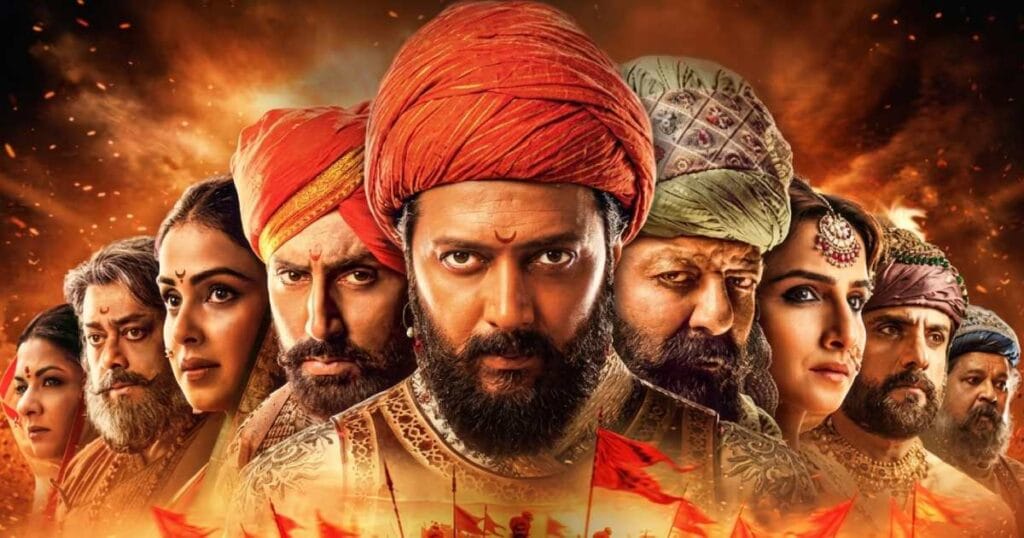
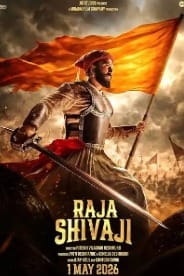
Review of the movie Raja Shivaji: Released on May 1, 2026 (Maharashtra Day), Raja Shivaji is a massive historical spectacle that marks Riteish Deshmukh’s most ambitious project to date, serving as both its director and lead star. Riteish Deshmukh yells for Swarajya while Abhishek Bachchan and Salman Khan salute the whole Maratha Empire!
1. Raja Shivaji
The “myth-making” can slow down the story at times, but the amazing cast, which includes Abhishek Bachchan as the calm Sambhaji Raje and a high-voltage cameo by Salman Khan as Jiva Mahala, keeps the fans on the edge of their seats. Santosh Sivan’s cinematography gives the Western Ghats a grounded grandeur that makes the forts and landscapes feel like real people. It is a “critic-proof” show made for the big screen that works better as an emotional tribute than as a factual historical record.
Key Details for Fans
- Salman Khan Cameo: His brief appearance as Jiva Mahala is a major highlight, reportedly drawing massive cheers in theaters.
- Language: Released in Marathi and Hindi, with a dubbed version in Telugu.
- Production: A joint venture between Jio Studios and Mumbai Film Company.
Raja Shivaji Movie Review
Riteish Deshmukh’s transformation into the title character is one of the best things about Raja Shivaji. He gives a sincere and very restrained performance, staying away from the loud, aggressive tropes that are common in historical epics. He instead focuses on Shivaji Maharaj’s quiet faith and strategic genius, showing him as a visionary leader instead of just a warrior. The film’s action choreography, which includes raw, precise, and immersive hand-to-hand combat, makes this grounded approach even better. The stunts are especially impressive at the end, when the stakes are highest. They make the physical toll of 17th-century war seem real to the audience.
The movie also gets a lot of help from its supporting cast and sound design. Sanjay Dutt’s performance as Afzal Khan is a stroke of genius; he gives the character a threatening and towering presence that makes the inevitable fight at Pratapgad a thrilling part of the movie. Ajay-Atul’s score ties these moments together and gives the movie its heartbeat. Their operatic background music and powerful anthems make every emotional beat and heroic scene even more powerful, making sure that the spirit of Swarajya fills the theater.
The movie does have some problems, though, especially with its pacing and length. The first half is often too long, with some scenes lasting much longer than they need to for the story to flow. This slowness is sometimes made worse by problems with narrative accuracy, where critics have said that the screenplay sometimes puts family drama and internal feelings ahead of a clearer, more focused look at important military events.
Finally, even though it has a big budget, the production has some problems with its VFX. There are some noticeable CGI problems in the first part of the movie that can be distracting, and too much slow-motion photography can make the story less urgent. The movie is a huge tribute to the Maratha legend, but these technical and structural problems keep it from being perfect in every way.